Commercial Solar Panels Edinburgh

Fix part of your energy costs for the next 25 years. Get a free quote from one vetted local installer, with savings and payback worked out from your own meter data.

  • Takes 60 seconds
  • MCS certified installer
  • Rated 4.5 on Trustpilot
  • Rated 5 stars on Google

Get Your Free Installer Quote

Which service are you interested in?
Do you own the property?
Your details

Renting? You can still enquire. Installation needs the owner's agreement.

Enter your name.

Postcode only. Our installer takes your address when they call.

Enter a UK postcode, for example EH1 1AA.

Enter a UK phone number, for example 07123 456789 or 0131 496 0000.

Enter a valid email address.

Verification could not load. Refresh the page, or call 07723 544994.

Thank you, your enquiry has been received.Our vetted local installer will be in touch to arrange your free, no obligation quote, usually within one working day.

Step 1 of 3

  • 1installer contacts you, not a list of companies
  • 805kWhgenerated per kWp each year on a typical Edinburgh business roof
  • £1mAnnual Investment Allowance a business can set against solar
  • 2035rooftop solar left out of Scottish business rates until 31 March 2035

Why Edinburgh Businesses Are Going Solar

Electricity is one of the few big overheads a business can't negotiate down for long. A supply contract fixes your rate for a year or three, then the market resets it. Commercial solar panels in Edinburgh change that: every unit your roof generates has a cost you already know, for 25 years or more.

  • 80%Rise in average business electricity prices since 2021
  • 28.6pPer kWh paid by businesses using 20 to 499MWh a year
  • No capOn what businesses pay when a contract ends
  • 25 yrsOf power at a cost you already know

1. Prices Up 80% Since 2021

UK businesses paid an average of 24.51p per kWh for electricity between April and June 2026, according to government figures. Five years earlier, the same average was 13.58p. That's an 80% rise, and smaller users have had it worse: businesses using 20 to 499MWh a year now pay around 28.6p, and the smallest users more than 38p.

2. No Price Cap for Businesses

Prices peaked in late 2023 at 28.39p on average. They've eased since, but they're still far above 2021 levels, and there's no price cap for businesses the way there is for households. Edinburgh businesses are no exception: when your contract ends, you take whatever the market is charging that month.

3. A Cost You Know for 25 Years

Solar panels for businesses work on a different basis. Once the system is paid for, each unit it generates costs nothing to buy. You also avoid the Climate Change Levy (0.801p per kWh from April 2026) on every unit you no longer import. That's the control most owners are after: part of your power supply priced for the next 25 years, not the next renewal.

4. Power When You Use It

The fit is strongest where power use and daylight overlap. Edinburgh's shops, offices, workshops, kitchens, cold stores and classrooms draw most of their electricity during the working day, so most of what the panels produce is used on site rather than exported for a few pence.

5. Carbon Figures for Tenders

There's a commercial angle too. Larger customers and public bodies increasingly ask suppliers for carbon figures, and UK central government contracts worth more than £5m a year already require a published Carbon Reduction Plan. A commercial solar system gives you a measured reduction to report.

Commercial Solar Savings in Edinburgh

Edinburgh sits at 56°N, so it gets less sun than southern England, but long summer days close much of the gap. To show what commercial solar panels in Edinburgh actually generate, we ran PVGIS, the European Commission's solar model, for the city centre using satellite data from 2005 to 2023.

How Much an Edinburgh Roof Generates

RoofOutput per kWp each yearA 50kWp system each year
South-facing, 35° pitch903kWh45,100kWh
South-facing, 20° pitch858kWh42,900kWh
South-facing, 10° (typical commercial roof)805kWh40,300kWh
Flat, panels laid flat735kWh36,700kWh
East or west-facing, 10°730kWh36,500kWh

April to September produces about three quarters of the year's output, and June generates roughly nine times as much as December. That suits businesses whose busy season is summer: hotels at festival time, sites with heavy cooling or refrigeration, and anyone trading long hours in the light evenings.

Monthly output per kWp, 10° south-facing roof

Apr to SepOct to Mar

805kWhOutput per kWp each year (PVGIS, Edinburgh)

What It Costs

Government data on more than 14,000 installations between 10kW and 50kW in 2025/26 puts the median price at about £1,204 per kW, including VAT where it applied. Bigger systems cost less per kW. No official series covers systems above 50kW, so the larger figures below are typical installer pricing for 2026.

£1,204Median Cost Per kW10kW to 50kW installations, 2025/26
50kWp system£40,000 to £55,000
100kWp system£75,000 to £95,000
250kWp system£170,000 to £210,000
500kWp system£300,000 to £380,000

Your own quote will depend on the roof, access and scaffolding, the inverters chosen and how much grid work is needed.

Worked Examples

These are illustrations, not promises. They use the Edinburgh figures above and the assumptions listed underneath.

See the full workings
50kWp100kWp
Generation each year40,252kWh80,505kWh
Used on site (80%)32,202kWh64,404kWh
Bill saving at 28.59p£9,207£18,413
Export income at 4.1p£330£660
Total yearly benefit£9,537£19,073
Cost (middle of the range)£47,500£85,000
Simple payback5.0 years4.5 years
Payback after the Annual Investment Allowance3.7 years3.3 years
Assumptions

Assumptions: a 10° south-facing Edinburgh roof; 80% of output used on site; 28.59p per kWh avoided, the April to June 2026 average for businesses using 20 to 499MWh a year; export paid at 4.1p; tax relief claimed at the 25% corporation tax rate. Prices are held flat, and maintenance and panel ageing are left out.

Change the assumptions and the answer moves. On an east-west roof, using 60% on site at the 24.51p national average, the 50kWp system pays back in about 8 years before tax relief and 6 after it. That's why the commercial solar panel installers we connect you with work from your own half-hourly meter data rather than averages.

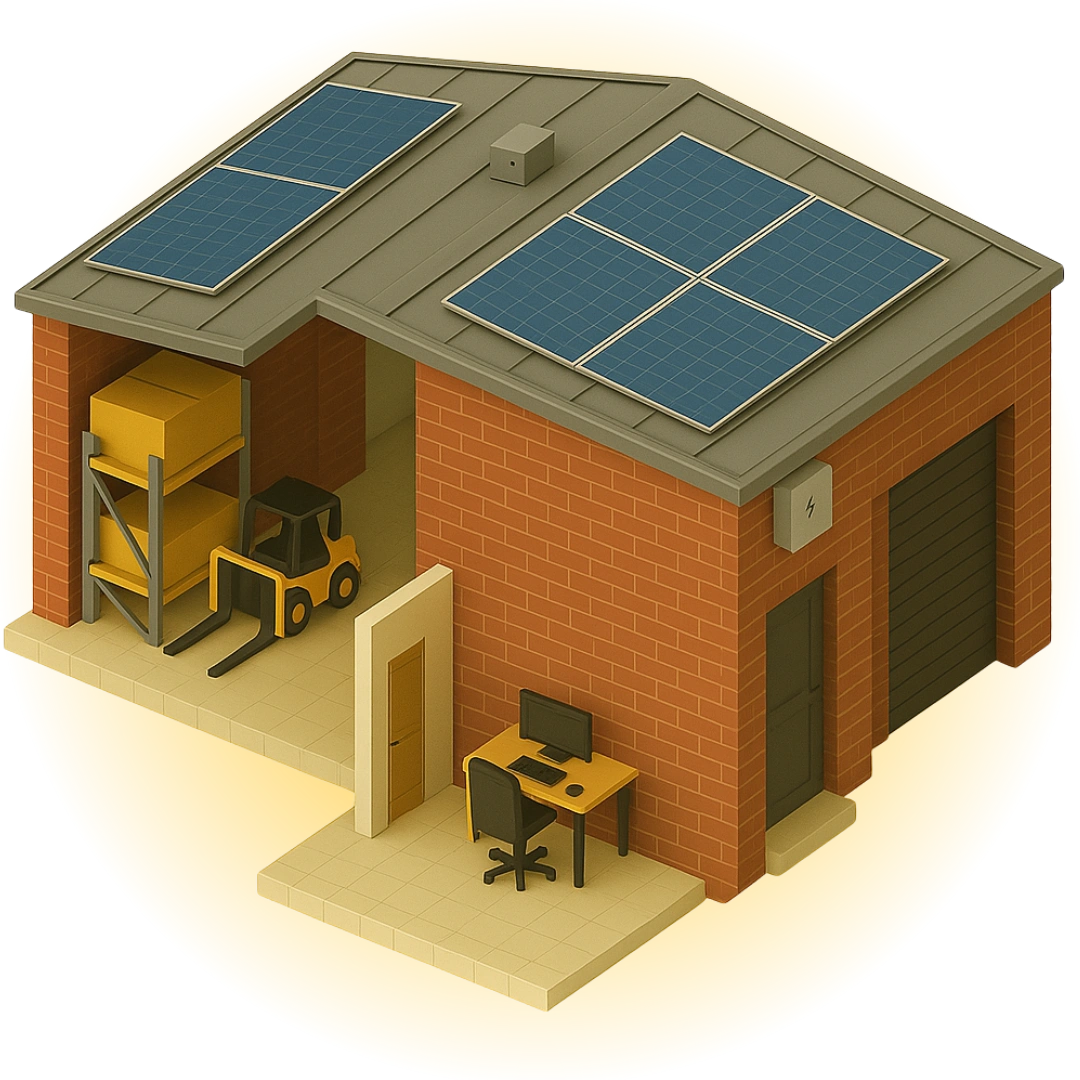
Illustration of a commercial building with solar panels

Put Your Roof to Work.

Find out what your building could generate and save. Get a free, no-obligation quote from a vetted local installer.

Commercial Solar PV Systems

Most solar panels for commercial buildings in Edinburgh go on the roof, but the roof isn't the only option. The right commercial solar PV design depends on your building, your land and when you use power.

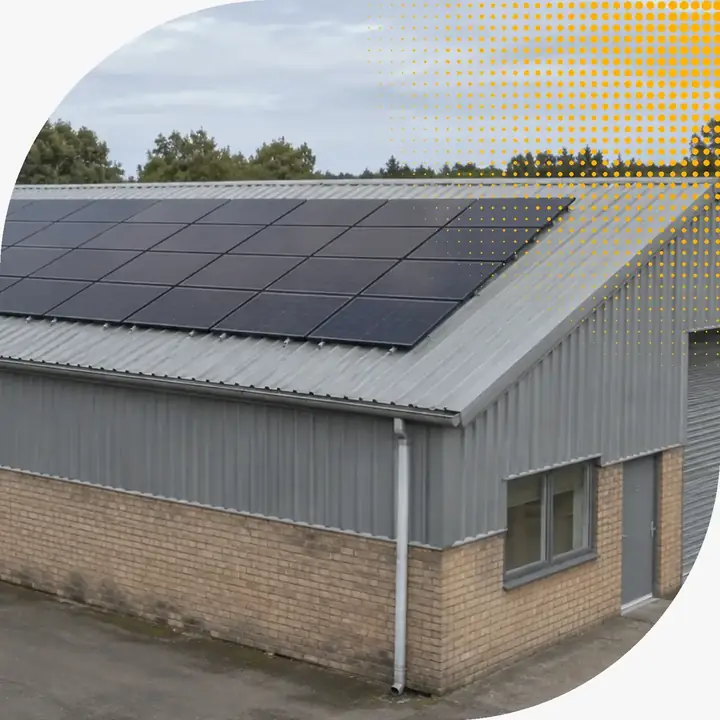
Solar panels on the pitched metal roof of an industrial unit

Pitched Roofs

Common on offices, shops and the older stone-and-slate buildings found across Edinburgh. A south-facing pitch of 20° to 35° gives the most output per panel, around 860 to 900kWh per kWp a year here. In conservation areas, street-facing slopes need planning permission, while rear slopes usually don't.

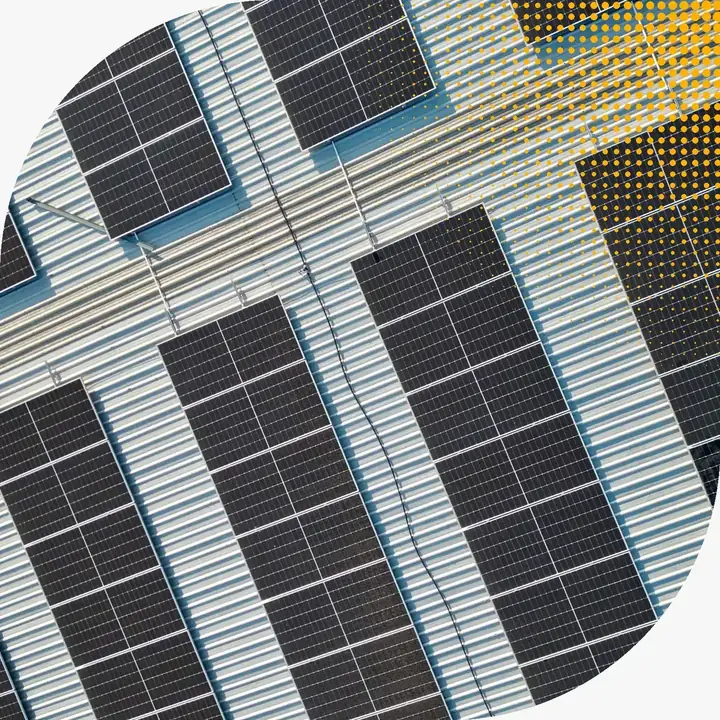
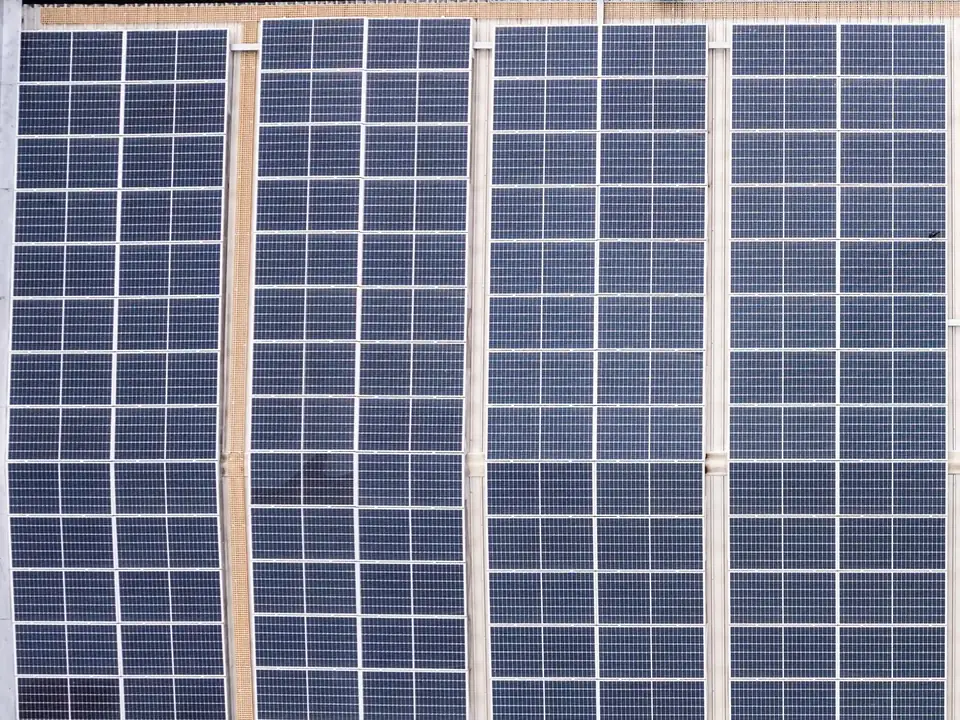
Aerial view of solar panel rows on a large commercial roof

Flat Roofs

Warehouses, industrial units and schools across Edinburgh often have large flat or low-pitched roofs. Panels usually sit on weighted frames, so the roof membrane isn't drilled, and the installer checks the structure can carry the extra load before anything goes up. East-west layouts fit more panels into the same space, at slightly lower output per panel.

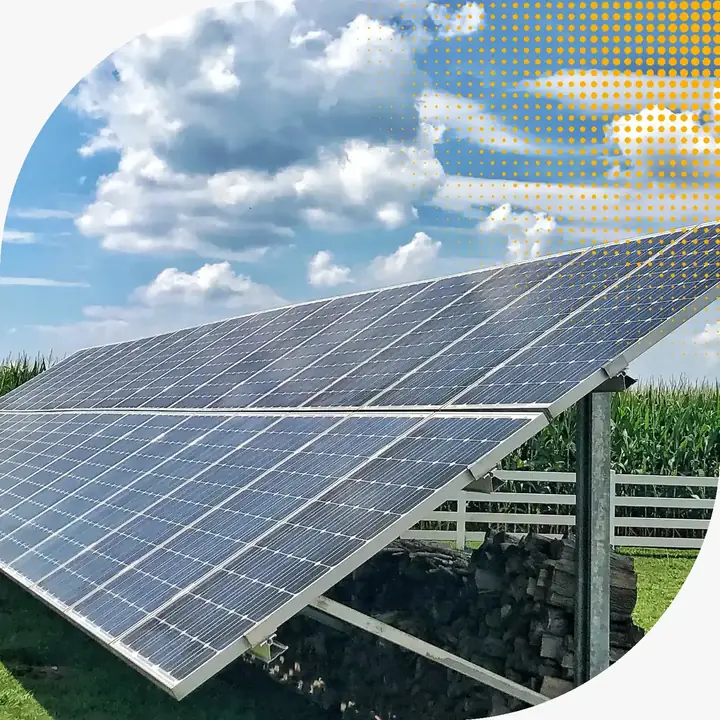
Ground-mounted solar array beside a farm field

Ground-Mounted Arrays

For farms around Edinburgh and the Lothians, and other sites with spare land. Panels can face due south at the best angle, clear of roof limits. Free-standing panels in the grounds of business premises only count as permitted development up to 12m² in total, so larger ground-mounted solar arrays need planning permission.

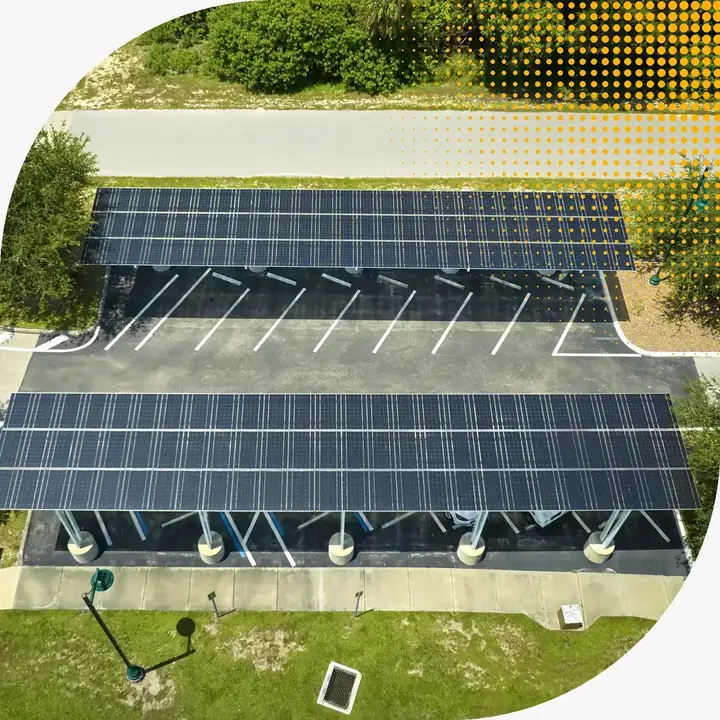
Aerial view of solar carport canopies over a car park

Solar Carports

Suited to business parks, retail sites and any premises with a staff or customer car park, a canopy generates power and shelters the cars underneath. Carports pair well with EV charging, and Scotland gives eligible EV charge points 100% business rates relief for 10 years from 2026-27.

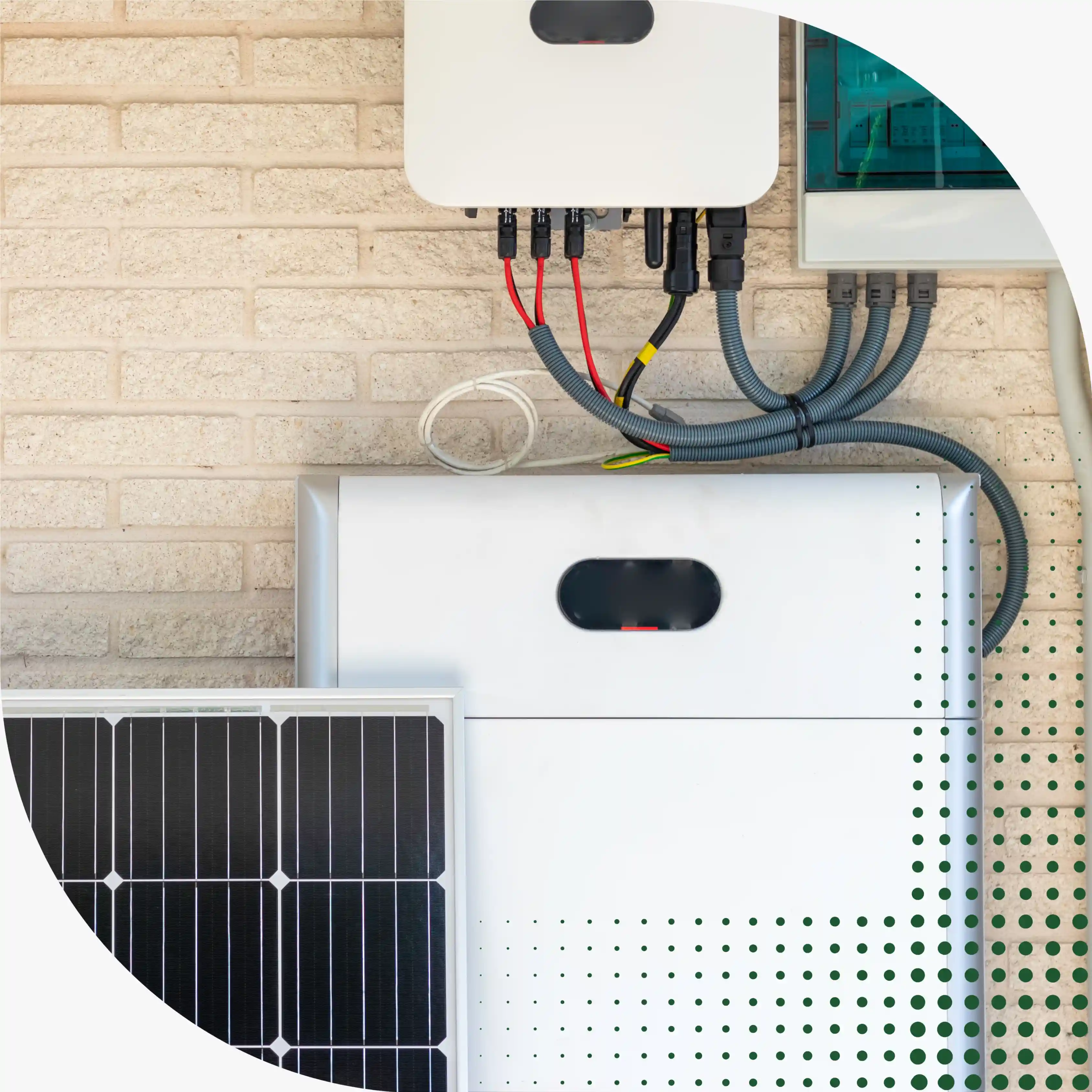
Battery storage unit and inverter mounted on a wall

Battery Storage

A battery stores daytime surplus for evenings, weekends or peak-rate periods. It also soaks up power that a grid export limit would otherwise waste. Commercial batteries typically cost around £400 to £600 per usable kWh. See our solar battery storage page, or read about Sigenergy systems.

Solar Panels for Every Kind of Business

Our vetted installers work with businesses of most shapes and sizes across Edinburgh. These are the sectors where commercial solar tends to pay back fastest, along with the one thing to check for each.

Hotels

Edinburgh's busiest months, August above all, fall in peak generation season, and laundries, kitchens and cooling run all day. Evening demand is high too, so a battery is worth costing. Restaurants follow a similar pattern.

Offices

Lighting, IT and air conditioning run through working hours, a close match to when panels generate. Solar panels for offices export more at weekends, unless a battery or Saturday opening uses that power.

Warehouses and Logistics

Big roofs, plus lighting, chillers and forklift charging through the day. Check the roof structure and who owns it under the lease. Read more on solar panels for warehouses.

Factories and Workshops

Heavy weekday demand across Edinburgh's industrial estates, often on a three-phase supply. Larger systems need grid approval from SP Energy Networks, which we cover below.

Retail

Daytime trading, chilled cabinets and lighting all line up with generation. Units in shopping centres rarely control their own roof, though. Our guide to shops and cafes goes further.

Farms

Farms on the edge of Edinburgh may run cold storage, ventilation and workshops, with barn roofs and spare land to build on. Ground-mounted arrays over 12m² need planning permission.

Care Homes

Edinburgh's care homes use power around the clock, so almost every unit generated is used on site. Care homes also pay 0% VAT on solar until 31 March 2027.

Schools

A large daytime load during term. Scottish schools close from late June to mid-August, right in peak output, so expect more export over summer or add a battery. See solar for schools.

Food Production

Refrigeration, pumps and processing run through the working day, often on a three-phase supply that suits larger systems.

Not on the list? If your business uses most of its power in daylight hours, it's likely a good fit, and the installer we connect you with can check from your bills.

How Commercial Solar Installation Works

Commercial solar installation in Edinburgh usually takes a few months from first enquiry to switch-on. Grid approval sets the pace; the work on your roof is quick by comparison.

Drone view of rows of solar panels covering a large commercial roof
  1. Get in Touch

    Tell us your business type, postcode and rough annual bill. We connect you with a vetted installer who covers your part of Edinburgh.

  2. Feasibility Check

    The installer reviews 12 months of bills or half-hourly data, plus roof photos and plans, then models what a commercial solar system would generate and save.

  3. Site Survey

    Our accredited installers check the roof's structure and condition, shading, the electrical intake, cable routes and where inverters or batteries would sit.

  4. Design and Approvals

    The installer finalises the design, applies for planning where it's needed and submits a G99 application to SP Energy Networks, whose quotes take 15 to 65 working days.

  5. Installation

    A 100kWp system typically takes 5 to 10 working days on site, with the work planned around your opening hours.

  6. Commissioning and Handover

    Testing, grid paperwork, help registering for export payments and access to a monitoring portal so you can see what the system produces.

  7. Aftercare

    Monitoring, cleaning and fault-finding over the years ahead. Our local installers also offer maintenance and repairs.

What to Have Ready

  • 12 months of electricity bills, or half-hourly data from your supplier
  • Roof photos and any building plans
  • Who owns the roof, and your landlord's consent if you lease
  • Opening hours, including weekends and seasonal peaks

Half-hourly data is the most useful thing you can share. It shows how much of the solar output you'd use on site, and that one figure moves the payback more than anything else.

Illustration of a commercial building with solar panels

Know Your Numbers First.

Tell us your business type and rough annual bill, and the installer we connect you with will model your savings before you commit to anything.

Tax, Rates and Planning for Edinburgh Businesses

Scotland's rules have moved in favour of commercial solar over the last few years. Here's where they stand for Edinburgh businesses in November 2026. Your accountant and installer will confirm how each one applies to you.

Sandstone terraces and slate roofs in Edinburgh's New Town
May 2024Rooftop solar on business premises becomes permitted development, with no size limit
31 Mar 20270% VAT ends for care homes, charities and other qualifying buildings, then 5%
31 Mar 2035Solar and storage left out of Scottish business rates valuation until this date

Tax Relief

Solar panels qualify for the Annual Investment Allowance, which lets a business deduct up to £1m of qualifying spending from its profits in the year of purchase. HMRC treats solar as special rate expenditure, so companies can't use full expensing on it; spending above the allowance may qualify for the 50% special rate allowance instead. Our guide to commercial solar costs and tax relief goes into more detail.

VAT

Most business premises pay VAT on solar at the standard 20%, which VAT-registered businesses can reclaim. Care homes, hospices, student accommodation, self-catering holiday lets and buildings used solely for charitable purposes pay 0% until 31 March 2027, then 5% (see the VAT rules). Our solar incentives page covers the schemes for homes.

Business Rates

Rooftop solar won't push up the rates bill on your Edinburgh premises. Plant and machinery used mainly for on-site renewable generation and storage is left out of Scottish non-domestic rates valuation until 31 March 2035 (see the rates exemption).

Planning Permission

Since May 2024, solar panels on business roofs in Scotland have counted as permitted development with no size limit, provided they stick out no more than 1m from the roof (see the planning rules). The exceptions matter in Edinburgh:

  • The Old and New Towns World Heritage Site, which covers much of the Old Town and New Town
  • Listed buildings and their grounds
  • Street-facing roof slopes in conservation areas
  • Sites within 3km of an aerodrome, which can include land near Edinburgh Airport

In those places your installer will apply for planning permission, and for listed building consent where it's needed. Building Standards still apply everywhere, whatever the planning position.

Grid Connection

Any system above 3.68kW per phase needs approval from SP Energy Networks, which runs Edinburgh's local grid, through the G99 process before it connects. If the local network is short of capacity, an export limitation scheme caps what you send to the grid so the project can still go ahead. A battery can then store what would otherwise be lost.

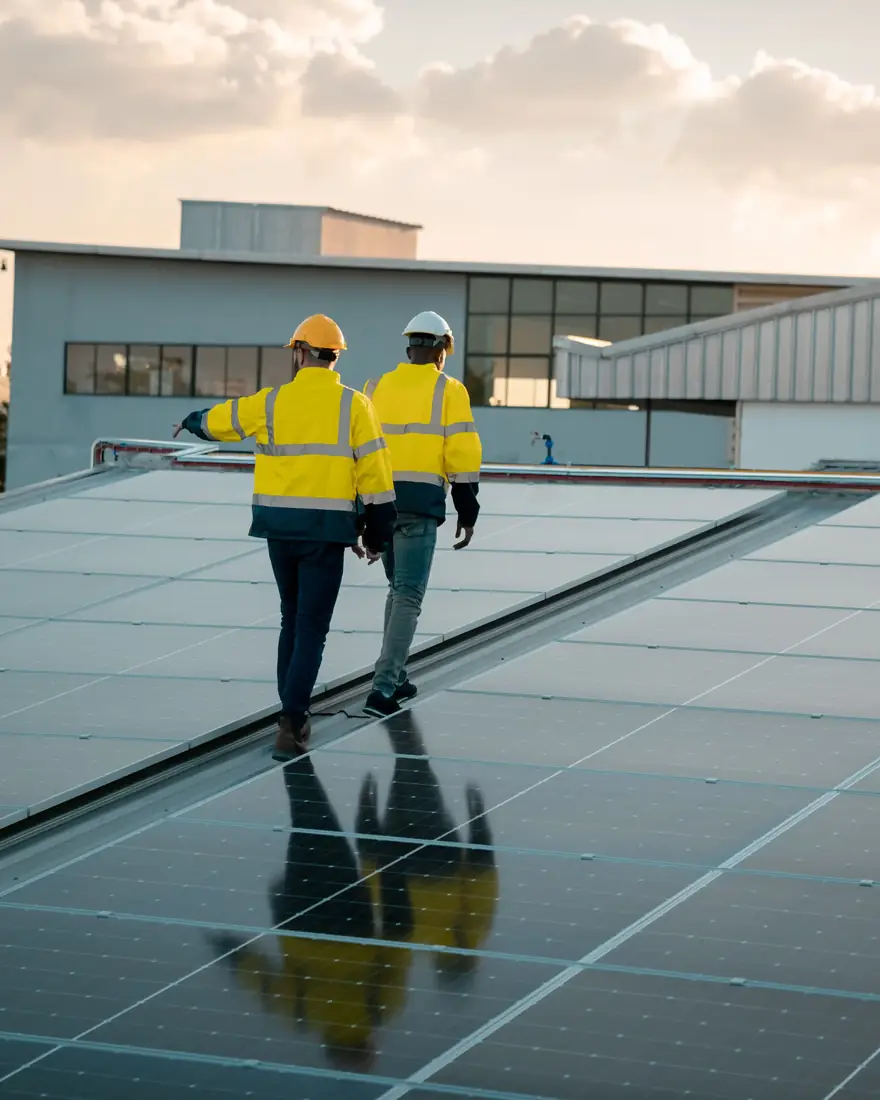
Two installers in hi-vis walking along a finished commercial solar roof

What We Ask of Our Installers

We're choosy about who we work with. Every installer we connect you with in Edinburgh is expected to:

  • Hold MCS certification, which systems up to 50kW need to qualify for Smart Export Guarantee payments
  • Use registered electricians working to current IET wiring regulations
  • Give upfront, itemised pricing and generation estimates based on your site, not a brochure
  • Handle the grid application, commissioning and handover documents for you

The installers in our network are MCS, NICEIC, RECC and EPVS accredited. Our recommended installer is also Sigenergy-certified, supplied by Sigenergy's UK Platinum Distributor, and an Octopus Energy Trusted Partner.

25years

Panel performance warranties of 25 years are standard on commercial solar systems. Your installer will set out the workmanship and equipment warranties in writing before you sign.

Why Solar Panels Edinburgh?

1

Edinburgh Know-How

Business roofs here come with their own rules: the World Heritage Site, conservation areas, listed buildings and the airport zone. We connect you with installers who know Edinburgh's planning rules and spot early when an application is needed, before any work starts.

2

Trusted Scottish Service

No pressure and no inflated promises. Choosing a commercial solar company in Edinburgh is a big decision, so your installer works from your own meter data and gives you a quote you can check line by line.

3

Future Proof

Your installer can design with batteries, EV charging or extra panels in mind, so a system you buy today still fits your Edinburgh business as it grows.

4

Community Centric

We want Edinburgh's businesses to keep more of what they earn. Every roof that generates its own power is also a step towards Scotland's 2045 net zero target.

Get free, no-obligation quotes and see the numbers for your own building.

Edinburgh Wide Coverage

Our vetted commercial solar panel installers cover every part of the city and the wider Lothians:

Wherever your premises are, you can check all the areas we cover.

Commercial
Solar FAQs

Questions business owners ask most often about commercial solar in Edinburgh.

How do we choose a commercial solar company in Edinburgh?

Check for MCS certification, ask for a quote built on your own meter data rather than a standard package, and get every warranty in writing. The installers we connect you with meet all three, and getting quotes through us is free.

How much do commercial solar panels in Edinburgh cost?

Government data puts the median for 10kW to 50kW systems at about £1,204 per kW. Typical installer pricing is £40,000 to £55,000 for 50kWp and £75,000 to £95,000 for 100kWp. Roof type, access and grid work all change the final figure.

We lease our building. Can we still go solar?

Yes, with your landlord's consent. Check the payback against the time left on your lease, and agree in writing who owns and maintains the panels when the lease ends.

Is our roof strong enough?

The installer's survey checks the structure and condition. Older asbestos-cement sheet roofs are fragile and need specialist handling, and some businesses re-roof or over-clad before fitting panels. On flat roofs, the weight of the frames is checked in advance.

Will solar affect our buildings insurance?

Tell your insurer before installation. Your installer provides the design and commissioning documents insurers usually ask for.

Does solar work through a Scottish winter?

Yes, but output drops. A 10° south-facing roof in Edinburgh produces about 12kWh per kWp in December, against about 114kWh in June. April to September delivers around three quarters of the year's generation.

What happens to power we don't use at weekends?

It's exported to the grid and paid for under the Smart Export Guarantee, or stored in a battery for later. Export rates open to anyone ranged from 1p to 6p per kWh in April 2026, and some suppliers pay more to their own customers.

Do we need planning permission?

Usually not. Since 24 May 2024, rooftop solar on business premises in Scotland has been permitted development with no size cap. The exceptions include the World Heritage Site, listed buildings, street-facing roofs in conservation areas and sites within 3km of an aerodrome.

Will our business rates go up?

No. Solar panels and batteries used mainly for on-site generation and storage are left out of Scottish non-domestic rates valuation until 31 March 2035.

Can we claim tax relief?

Usually, yes. The Annual Investment Allowance lets a business deduct up to £1m of qualifying spending in the year of purchase, which covers most systems. Speak to your accountant about how it applies to you.

How long does it take, and will it disrupt the business?

Grid approval from SP Energy Networks typically takes 15 to 65 working days. The installation itself takes about 5 to 10 working days for a 100kWp system, planned around your opening hours.

Can solar power run a warehouse?

It can cover much of a warehouse's daytime demand, especially lighting, chillers and forklift charging, and a large roof often has room for a big system. It won't run the site alone overnight or through winter, so you'll still draw from the grid, or a battery, for part of the time.

How long do commercial solar panels last?

Panel performance warranties of 25 years are standard. Inverters and batteries carry shorter warranties than panels, and your installer will tell you what each one covers.

Can we pay monthly?

Finance options are something to discuss with your installer when you get your quote.

Make Your Move.
Go Solar.

Get a free, no-obligation quote for commercial solar panels in Edinburgh from a vetted local installer.

Solar Panels Edinburgh is operated by ReachAI Ltd. Registered in England and Wales. Company No.15123686. View our privacy policy and terms of service for more details.

Solar Panels Edinburgh. Copyright 2026. All Rights Reserved.