
Do Solar Panels Work in the Snow? – Edinburgh 2026
When Edinburgh wakes to a blanket of white, many homeowners wonder whether their solar panels have simply shut down for the day. It's a fair question, especially in a city where winter brings both the occasional snowfall and those characteristic grey skies that seem to stretch for weeks.
Quick Take: Solar panels continue generating electricity throughout Scottish winters, and cold temperatures actually boost their efficiency. Whilst heavy snow temporarily blocks production until it melts or slides off (typically within hours), your system will work year-round. Edinburgh sees around 15-20 days of snow annually, meaning brief interruptions rather than prolonged downtime. The real winter challenge isn't the cold or snow, it's shorter daylight hours. Your panels will keep powering your home across all seasons, just with reduced output during winter months.
Table of Contents
Introduction: Solar Energy Through an Edinburgh Winter
How Solar Panels Work (In Simple Terms)
How Snow Affects Solar Panel Performance
Do Solar Panels Work When They're Covered in Snow?
Cold Weather vs Solar Efficiency: A Winter Myth-Buster
Snowfall in Edinburgh and the UK: What Homeowners Can Expect
Are Solar Panels Safe in Snow and Ice?
Winter Maintenance Tips for Solar Panels
Introduction: Solar Energy Through an Edinburgh Winter
Edinburgh's winters naturally raise questions about solar performance. Between December's short days (barely 7 hours of daylight at the solstice) and the haar rolling in from the Firth of Forth, it's easy to wonder if solar makes sense here. Winter generation typically drops to about a quarter of summer levels, but here's what matters: panels need light, not warmth. Even on a grey January afternoon, your panels are working. They'll generate meaningful electricity on most winter days, making solar a reliable year-round energy source even amid Edinburgh's frosts and periodic snowfalls.
How Solar Panels Work (In Simple Terms)
Solar panels generate electricity through the photovoltaic effect. When light hits a panel, energy is absorbed by photovoltaic cells, creating movement of electrical charges that produces current. This creates direct current (DC) electricity, which flows through an inverter to become alternating current (AC) that powers your home.
Here's the key bit: panels respond to both direct sunlight and diffuse light. They'll generate power on overcast days, not just when skies are clear. Light reaches the cells, electrons move, and electricity flows. This means winter doesn't stop your panels. They don't require heat, just exposure to daylight. Whether you're in Leith or Stockbridge, your panels respond to whatever light reaches them.
How Snow Affects Solar Panel Performance
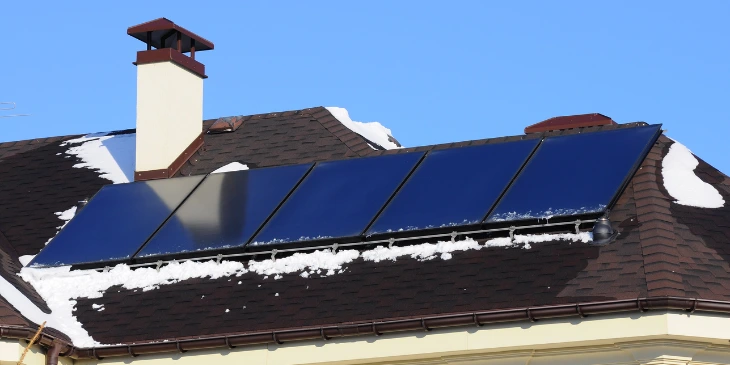
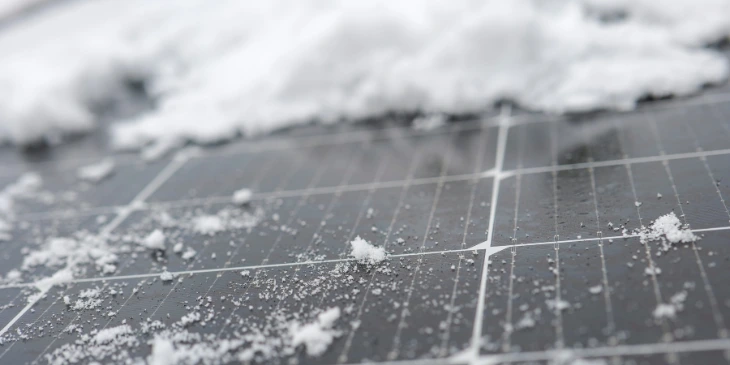
Snow impacts solar output primarily by blocking light from reaching the cells. A light dusting usually has little effect, as wind clears it and some light penetrates through. Heavy accumulation, however, stops generation by completely covering the panels. When thick snow sits on your array, almost no light gets through.
As soon as snow slides off or partially melts, exposed sections immediately begin generating again. Research shows annual energy losses from snow are typically modest. Most grid-connected systems lose only a small percentage of yearly output to snow coverage. Each winter storm brings a temporary production drop when panels are buried, but snow rarely affects annual generation significantly.
Panels stay idle during heavy snowfall, but once even part of the surface clears, they spring back into action. For homes across Edinburgh, this means a handful of reduced-output days each year rather than a persistent issue.
Do Solar Panels Work When They're Covered in Snow?
When solar panels are fully buried under snow, they'll temporarily stop generating electricity. Thick coverage blocks all sunlight from reaching the cells. However, this situation rarely lasts long. Solar panels are designed to shed snow quickly. They're mounted at an angle, and their dark surface absorbs heat from any available sunlight, both of which encourage snow to slide off soon after it falls.
In most typical Scottish winter storms, snow melts or slides off within a day once the sun appears. Even a thin layer isn't much of a problem, as light can penetrate sparse or powdery snow. Fortunately, solar arrays typically clear themselves. The first bit of sunlight causes snow to loosen and slip off in chunks. Many homeowners find they don't need to intervene at all, as the snow self-clears within hours.
Modern systems automatically resume normal generation as soon as even a portion of the panel becomes exposed. Whether your installation is in New Town or South Edinburgh, panels work perfectly immediately after snow slides off, which usually happens naturally and promptly.
Cold Weather vs Solar Efficiency: A Winter Myth-Buster
There's a widespread myth that cold weather harms solar panels, but the truth is quite the opposite. Solar panels are more efficient at low temperatures. They generate electricity more effectively in cold conditions than in hot weather. High temperatures increase resistance in solar cells, reducing output, whereas cold temperatures improve voltage and overall performance.
Laboratory data and real-world testing confirm that panels produce more power per unit of sunlight on a cold sunny day than a hot one. Panel output starts to decline once cell temperatures exceed roughly 25°C (77°F). In winter, panels often operate well below that threshold, meaning they work at peak efficiency during those crisp, frosty mornings.
What does this mean for an Edinburgh winter? The chilly weather itself doesn't hinder your solar panels. Shorter days and lower sun angle reduce total energy generation, but cold air helps panels work more efficiently when the sun is out. Engineers call this a negative temperature coefficient. Solar cell efficiency increases as temperature decreases. The notion that "solar only works in hot sunny climates" is simply wrong. Panels thrive in cold, sunny conditions.
The real winter challenges are reduced sunlight and snow coverage, not the temperature reading. As long as panels receive sunlight, they'll generate electricity, and do so more efficiently in January's chill than July's warmth.
Snowfall in Edinburgh and the UK: What Homeowners Can Expect
How much snow does Edinburgh actually get? The city experiences more winter weather than many UK locations. Met Office data shows Edinburgh averages around 15-20 days of snowfall per year, though these are days with at least some snow, often light flurries. Actual accumulation tends to be modest, typically just a few centimetres per year.
Heavy winter storms are relatively infrequent in Edinburgh. When they do arrive, snow often melts within days due to Scotland's maritime climate. Prolonged coverage on rooftops isn't very common except during unusual cold spells. The city's coastal location means milder conditions than you might expect for somewhere this far north.
In practical terms, your solar panels in Edinburgh will spend most of winter exposed and generating whenever daylight is available. Only during those occasional snowy days might they be briefly covered. Winter-related downtime is typically limited to a handful of days each year. Scottish homeowners successfully operate solar arrays despite winter weather, since our precipitation is modest compared to many other regions. With proper solar panel installation, Edinburgh's climate poses no serious obstacle to solar power. Whether you're in Old Town or West Edinburgh, winter weather is an occasional visitor rather than a constant companion.
Can Snow Ever Help Solar?
It might sound counterintuitive, but winter conditions can actually benefit solar panels. Fresh white snow acts like a mirror, reflecting additional sunlight onto panels. This albedo effect can boost energy output on clear days. Once panels are clear, bright sunlight bouncing off the ground or surrounding surfaces can increase production compared to normal. Panels receive light from both directions: direct sun from above and reflected light from below.
Snow also has a cleaning effect. As it melts and slides off the array, it washes away dirt and debris accumulated on the glass. Any dust, pollen, or grime gets carried off the roof. These anti-soiling properties can leave panels more efficient after a storm, because a clean panel converts light to electricity better than a dirty one.
Finally, snowy periods are often followed by clear, blue skies, which are excellent for solar generation. In Scotland, we often get high-pressure cold snaps where it's cold and sunny, ideal conditions for panels. Between the reflective boost, self-cleaning, and cold-air efficiency, a post-storm sunny day can help compensate for the energy you missed. If you've got solar battery storage installed, these high-output days become even more valuable.
Are Solar Panels Safe in Snow and Ice?
Will winter conditions damage your solar panels or roof? Solar panels are engineered to be very durable. They're built with tempered glass and sturdy frames that can withstand substantial loads, including hail. All certified panels undergo pressure tests to ensure they can handle heavy snow and wind.
A typical solar module is rated for about 2,400 Pascals of pressure, equivalent to roughly 50 pounds per square foot. Many modern panels are rated even higher at 5,000 Pa, about 100 lb/ft². As long as your installer selected appropriate modules for Scottish conditions, your roof and panels can handle typical Edinburgh snowfall with plenty of safety margin.
For Edinburgh's typical accumulation (usually less than 30cm at a time), solar panels are safe and won't collapse. Regarding hail, modules use impact-resistant tempered glass built to withstand golf-ball-sized hail at high speed. It's very rare for Scottish hail to damage a panel.
One thing to be aware of is snow sliding off panels. Panels are slick, and when snow releases, it can slide off in large sheets. In colder climates, some owners install guards on the lower edge to control this. These aren't commonly needed in Edinburgh's moderate climate, but worth considering if you have a steep roof over doorways or walkways.
Solar panels are designed to handle winter conditions. The equipment is weatherproof and robust. As long as your system is installed to code, you shouldn't worry about damage. Panels won't freeze or crack from cold temperatures, and electrical components are sealed against moisture. If you're considering solar maintenance or repair, winter-related damage is exceptionally rare when systems are properly installed.
Winter Maintenance Tips for Solar Panels
Solar panels are low-maintenance, even in winter. The best approach is patience. Let nature take its course rather than trying to clear them yourself. Industry experts don't recommend climbing onto your roof or aggressively scraping panels. Not only is that risky, but you could scratch the glass and void your warranty.
In most cases, snow will slide off on its own relatively quickly once the sun emerges. Panels tend to clear faster than the surrounding ground because they're dark and angled, which encourages melting. Often, within hours or a day, your panels will be back to generating as normal.
If you do feel the need to remove snow, do so carefully and safely from the ground. Use a soft rake with a plastic head and extension pole. Gently pull the snow downwards off the panel. Don't use metal tools or hard shovels. And definitely never pour hot water on a cold panel. The rapid temperature shock could crack the glass.
Monitor your system output from your inverter app. This tells you if panels are covered (output drops to near zero), saving you from having to visually inspect the roof in bad weather. If you have a ground-mounted array, keep the area in front clear by shovelling a few feet of space. Prune any tree branches that might dump snow onto your panels during storms.
Don't stress about short-term losses. Solar systems are sized to produce ample energy over the whole year. Missing a day or two during a blizzard has a negligible effect, perhaps only 1% of yearly generation. The consensus among professionals is that attempting to clear panels is usually not worth the safety risk. For more guidance, you can always get in touch, and Solar Panels Edinburgh will connect you with local installers who understand Edinburgh's specific climate.
Final Thoughts on Solar in Snow
Snow doesn't need to be a barrier to solar energy in Edinburgh. Your panels are built to handle Scottish winters, from the occasional snowfall to those cold, crisp mornings when efficiency actually peaks. The key is understanding that winter output is natural and expected, not a flaw in the technology. Solar systems are designed to balance seasonal variation, delivering reliable, sustainable energy year-round.
If you're considering making the switch to solar or want to learn more about how panels perform in Edinburgh's climate, get in touch, and we'll connect you with our vetted installers who can help you understand exactly what to expect from your system across all seasons.

Solar and Snow FAQs
Do solar panels still generate electricity during winter months?
Yes. Solar panels operate whenever there's daylight. They don't need warmth, just light. In winter, panels produce less overall energy due to shorter days and lower sun angle, but they continue working. Cold temperatures can actually improve panel efficiency. Whilst output is lower than summer, your panels will still generate power throughout winter.
What happens if my solar panels are covered in snow?
If panels are fully covered, they temporarily stop producing power. However, this is usually short-lived. Snow tends to slide off on its own once the sun comes out and warms the panels. Even partial clearing is enough to restart generation. Typically, within a day of snowfall, most snow will have shed off a well-angled panel. Panels resume automatically as soon as they're exposed.
Should I remove snow from my solar panels?
Generally, no. The recommended approach is to let it melt or slide off naturally. Attempting to scrape it off can be risky. You could slip and fall, or scratch the panels. Many warranties caution against homeowner removal. If you do choose to remove it, do it safely: use a soft rake with a long extension whilst standing on the ground. Never use metal tools or hot water. In Edinburgh's climate, it's rarely necessary to clear panels manually.
Can snow or ice damage my solar panels?
Solar panels are designed to withstand winter conditions. They're built with high load ratings. Many are rated for 5,000 Pa or more, equivalent to over a metre of snow. Panels are made of tempered glass, which is very tough. They regularly survive hail storms without issue. As long as your system was installed per code, your roof and panels should handle Scottish winter safely.
Will my panels still produce enough energy to be worth it in the winter?
Yes. Solar systems are sized for yearly usage, knowing summer over-produces and winter under-produces. In Scotland, a 4 kW system might generate 25-30% of summer output during winter. Spring and summer compensate for winter's lull. Over a whole year, you get the expected kWh. If you have grid-tie with net metering or smart export, credits from sunnier months help cover winter usage. Countries with harsher winters have millions of successful installations. For more about our approach to year-round solar performance.