
Solar in Edinburgh: Is Roof Drainage Affected?
Edinburgh homes weren't built with solar panels in mind. Georgian terraces and Victorian tenements have stood for centuries because their drainage works brilliantly. Add panels without thinking about water flow, though, and you're asking for trouble. The city's 700mm of annual rainfall and that persistent haar from the Firth of Forth don't forgive mistakes.
Quick take: Solar panels can disrupt roof drainage if mounted carelessly. Blocking gutters, valleys, or downpipes leads to leaks that'll undo any energy savings. This guide covers what to check before installation, where not to put panels, and how to maintain everything so your roof handles Edinburgh's weather.
Table of Contents
Understanding Roof Drainage in Edinburgh's Historic Buildings
Where Solar Installations Create Drainage Problems
What to Check Before Installing Solar Panels
Safe Panel Placement Rules for Edinburgh's Weather
Installation Details That Protect Your Roof
Maintaining Drainage After Your Solar Installation
Understanding Roof Drainage in Edinburgh's Historic Buildings
Walk down any street in New Town or Old Town and you'll see cast-iron guttering that's been channelling water for over a hundred years. These systems move rainwater from your roof to the ground via gutters, downpipes, and valleys. When they work properly, water flows away from your building's structure. Block any part of that path, and you're looking at pooling, leaks, and structural damage.
Here's the thing: a drain moves water off to protect your building's integrity. Solar panels change how water moves across your roof. Modern arrays sit on metal rails fixed to your roof deck, and those rails, the panels themselves, and all the cabling can redirect or obstruct flow that's worked for generations.
Traditional Edinburgh buildings have complex roof valleys where different sections meet. Slate roofs are common, and while they're brilliant at shedding water, they rely on precise angles and clear pathways. Roofs normally shed water by design, and adding equipment that wasn't part of the original plan means thinking carefully about placement.
At 56°N latitude, we get less intense sunshine than southern England but longer summer days. What we also get is weather that's rarely dramatic but always present. That drizzle adds up. The haar can leave surfaces damp for days. Your roof needs to handle all of it, and a poorly planned solar installation creates problems in a system that's stood the test of time.
Where Solar Installations Create Drainage Problems
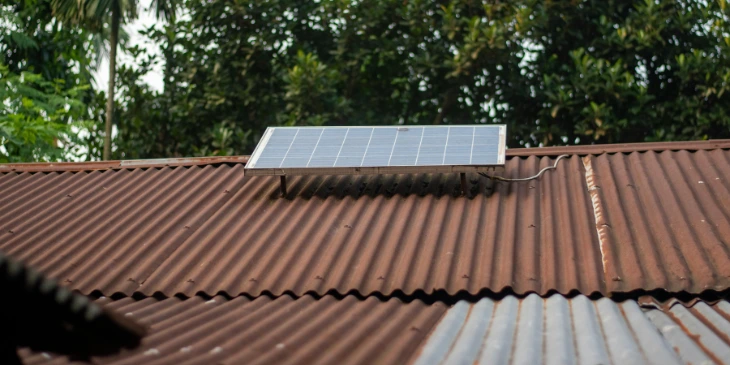
Solar panels don't leak, but they change where water goes. The usual trouble spots are panels sitting over valleys, cables running across gutter lines, and mounting hardware too close to the roof edge.
Valleys are V-shaped channels where two roof planes meet. They concentrate water flow. Put a panel across a valley and you've created a dam. Water backs up, finds gaps in your slates, and you've got water in your loft. This is particularly common in Stockbridge and Leith, where terraced properties have complex roof geometries.
Electrical conduit is another issue. PV systems need cables running from panels to your inverter. If those cables cross your gutter line or drape across a downpipe, they catch leaves and debris. One autumn storm and you've got a blockage. Any obstructions like this hinder proper drainage.
Then there's the edge problem. Panels mounted too close to your gutter can overshoot it when it rains. Water runs off the panel, misses the gutter, and streams down your fascia. Over time, that rots timber and saturates masonry. Poorly sealed mounts compound this by creating penetration points where water gets in.
Here's what works: keep panels at least two feet from any valley centreline, route cables along panel frames rather than across flow paths, elevate mounting rails so water passes underneath, and maintain a sensible setback from gutter edges.
What to Check Before Installing Solar Panels
Before anyone puts a bracket on your roof, you need to know your drainage actually works. Start with your gutters. Are they clear? When did you last clean them? Cast-iron guttering common in South Edinburgh can corrode at joints, creating gaps that become big problems when panels add water volume to one section.
Check the slope. Gutters need consistent fall toward the downpipe. If sections have sagged, water sits rather than flows. You'll notice this as dark staining or moss growth along the gutter line. Fix these issues before solar goes up, because access becomes harder afterwards.
Valleys need attention too. These channels collect leaves and moss, particularly if you've got trees nearby. A blocked valley won't show itself until heavy rain, then suddenly water's coming through your ceiling. Clear everything out, check the valley flashing is intact, and make sure there's no daylight showing through gaps.
For properties with flat roof sections (common on extensions around West Edinburgh), inspect your outlets and overflow points. These need to be clear and properly sized. If panels are going on a flat section, your installer needs to plan around these drainage points, not over them.
Don't skip this stage. Once panels are up, you can't easily access what's underneath. A blocked valley or sagging gutter that's merely annoying now becomes a major headache when you need to work around a solar array to fix it.
Safe Panel Placement Rules for Edinburgh's Weather
Edinburgh gets around 140 rainy days per year. That's not a climate where you can be casual about roof drainage. When planning your array layout, think about where water needs to go, not just where panels can fit.
The two-foot rule is your friend. Stay at least 60cm back from any gutter edge, valley, or downpipe location. This creates a buffer zone where mounting hardware can't interfere with water channels. It also gives you working space if you need to access gutters later.
Elevation matters more than most people think. Your panels sit on rails, and those rails need clearance underneath. Aim for 8-15cm of space between the rail and your roof surface. This lets rainwater flow beneath the array rather than pooling. On lower-pitch roofs common in East Edinburgh, this clearance becomes crucial because water has less natural momentum.
Fire regulations often require 90cm clear paths at roof edges anyway, which works perfectly for drainage. Your array shouldn't extend right to the edge, both for firefighter access and to keep gutters functional. If your roof has multiple levels, pay attention to where upper sections drain onto lower ones. Panels on the upper section can't overhang the edge above a lower roof.
Cable routing deserves thought before installation starts. PV cables should run along panel frames and up to the roof penetration point without crossing perpendicular to your gutter lines. If cables must cross a water path, they need to be secured high enough that debris flows under them.
Installation Details That Protect Your Roof
The quality of your installation determines whether panels and drainage coexist peacefully for the next 25 years. Every penetration through your roof covering is a potential leak point. The difference between a good installation and a poor one often comes down to how seriously the installer takes weatherproofing.
Proper flashing around mounting brackets is non-negotiable. These metal or composite pieces seal the gap between your mounting bolt and the roof surface. They need to sit under upslope slates and over downslope ones, creating a shingled effect that directs water away from the penetration. Sealant alone isn't enough. You need mechanical barriers that work with gravity.
Cable management ties into this. Loose wiring under your array creates pockets where leaves and debris collect. Once that happens, you've created a dam that holds water against your roof surface. Proper installations use cable clips fixed to the mounting rails, keeping everything tidy and elevated.
During installation, there's always debris. Drilling through slates creates grit and dust. That material needs clearing before it washes into your gutters. A responsible installer cleans as they go, not at the end.
For Edinburgh installations, consider the building's age and construction. Listed buildings in conservation areas have additional requirements, but even non-listed properties deserve respect. If your home has been handling Edinburgh's weather since 1850, the installation method should honour that heritage.
Maintaining Drainage After Your Solar Installation
Your maintenance responsibilities don't end when the panels are switched on. In fact, they increase slightly because you now have equipment that changes how debris accumulates on your roof.
Gutters need clearing at least twice yearly. Spring and autumn are traditional times, coinciding with the end of leaf-fall and before heavy winter rains. With solar panels, add another check after any major storm. Panels can channel leaves and twigs to specific points, creating concentrated deposits.
Getting to your gutters becomes trickier with panels in place. If you've got trees nearby (think the streets around the Meadows or Inverleith Park), gutter guards become worth considering. These mesh screens sit over your gutter, letting water through while keeping out leaves. They're not perfect, but they reduce how often you're up a ladder.
Panel cleaning itself usually isn't urgent in Edinburgh. Our regular rain does most of the work. But if you notice output dropping and there's no obvious shading issue, a gentle hose-down can help. Avoid pressure washers. They can force water under panel edges or damage seals.
Check your performance data monthly. Most modern systems give you daily generation figures. If these drop suddenly without a weather explanation, it's worth investigating. Sometimes the issue is dirty panels, but it could also be water pooling somewhere affecting electrical connections.
Annual inspections catch developing problems. Look at your mounting brackets and flashings from ground level with binoculars if you can. Any sign of lifted flashing or corroded metalwork needs professional attention. Water damage starts small but compounds quickly.
Professional maintenance and repair services make sense if you're not comfortable with heights or don't have time. They'll check your panels, clear your gutters, and inspect all the weatherproofing in one visit.
Final Thoughts on Roof Drainage and PV
Proper roof drainage is critical when adding solar. If any piece of the water pathway is blocked, consequences range from minor rot to major leaks. A PV installation should not interfere with roof drainage. Following the steps above (careful panel placement, elevated racking, sealed mounts, and ongoing cleaning) lets your array coexist with the roof's runoff plan.
Think of your solar installation as part of the roof. Design it so rain still has a clear path to the gutter. Do that, and your panels generate clean energy without causing floods. Whether you're in a Georgian terrace or a Victorian tenement, Edinburgh's roofs need to handle our rainfall and haar effectively. When you combine quality solar panel installation with proper drainage planning, you're protecting both your investment and your home.
If you're considering solar for your Edinburgh property and want to make sure it's done right, get in touch and we'll connect you with a vetted installer who'll assess your roof, plan around your drainage system, and deliver a solution that performs for decades without compromising your home's weather protection.

Roof Drainage and Solar Panels FAQs
Will solar panels definitely cause drainage problems?
Not if they're installed properly. The key is maintaining clearance around all water channels and elevating mounting rails so water flows underneath. Problems arise when panels sit too close to valleys or gutters, or when cables cross drainage paths. A well-planned installation respects your existing drainage system.
What should I check on the roof before installation?
Inspect gutters, downpipes, and valleys. Make sure gutters are clean and firmly attached, and valleys are free of debris. Verify that flat-roof drains or outlets aren't blocked. Also assess roof condition and confirm it can support panels. Ensure the current drainage system works well before adding solar equipment.
How much clearance should I leave around gutters and roof edges?
Leave at least 15-30cm from the gutter lip so rain can still fall in. For critical drainage paths like valleys, stay at least 60cm back. Many jurisdictions require 90cm clear zones at edges for firefighter access, which also helps drainage. Don't cover or overshoot the gutter.
Do I need to install gutter guards if I go solar?
It's a good idea, especially if you have trees. Solar panels can make gutter access harder, so adding a leaf guard simplifies maintenance. Guards prevent leaf build-up that might otherwise accumulate just out of reach under your panels.
How often should I clean the gutters after installing PV?
Follow a regular maintenance schedule, at least twice a year in spring and autumn. Clean gutters and downpipes after storm seasons and after any big leaf-fall. Also glance under your panels periodically; if you see debris or standing water, clear it out. Keep an eye on panel performance: a drop in output can signal a panel or roof surface getting dirty. Regular checks ensure rain continues to flow freely, protecting both your roof and your solar battery storage investment.