
Can You Solar Power Sheds in Scotland?
Got a shed sitting in your Edinburgh garden that you'd love to power up? Whether it's a workshop taking shape behind a Stockbridge terrace, a home office tucked into a Leith back garden, or a studio space that simply needs a working light and somewhere to charge tools, solar power could be the answer.
Quick take: Yes, you can solar power a shed in Scotland. Panels generate from daylight rather than direct sunshine, which matters in a city that sees plenty of grey skies. The right setup comes down to your energy needs, available roof space, and how the system connects to your property. Planning permission is usually not required under Scottish permitted development rules, but the electrical work must comply with Scottish building standards. Here's what you need to know.
Table of Contents
What Can You Run on Solar Power in a Shed?
How Many Solar Panels Do You Need for a Shed?
Do You Need a Battery for Shed Solar Panels?
What Type of Solar Panel System Is Best for a Shed in Scotland?
How Much Does It Cost to Solar Power a Shed?
Can You Solar Power a Shed?
The short answer is yes, and it works better than many Edinburgh homeowners expect. Panels generate electricity from daylight, not just direct sunshine, so they keep producing even on the kind of dull, drizzly days the city is well known for. Scotland's northerly latitude means shorter daylight hours in winter, but the long summer days make up for that across the course of a year.
As long as the shed roof gets decent light, the structure is sound enough for mounting, and shading is manageable, an Edinburgh shed can absolutely host a panel system. South-facing roofs perform best, though east and west-facing options still produce usable power. In denser parts of the city, particularly around Old Town or New Town, shading from stone tenements, boundary walls, and mature trees is worth assessing early.
Two practical questions are worth settling before going any further.
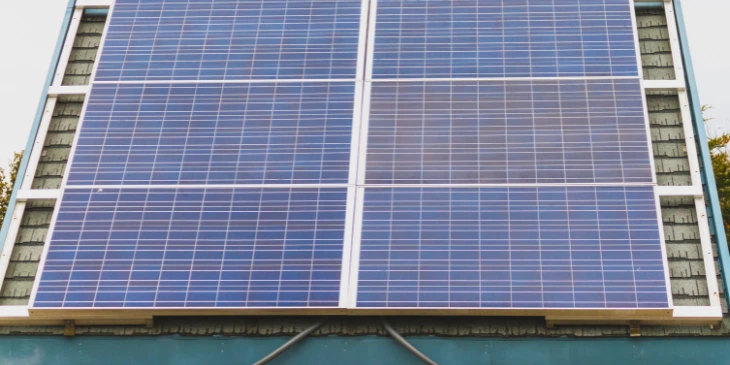
The first is planning. Under Scottish permitted development rules, solar panels on residential outbuildings including sheds are generally allowed without a planning application, provided the panels stay within 500mm of the roof surface and the shed sits within the rear curtilage of the property. Edinburgh is a different conversation from most UK cities here. Around 50 designated conservation areas cover the city, and the Old Town and New Town hold UNESCO World Heritage Site status. Properties within listed buildings or certain conservation areas may require additional consent, so a quick check with City of Edinburgh Council before committing is always worth it.
The second is electrical safety. Electrical work in garden sheds, including PV installation, must comply with building standards under the Building (Scotland) Regulations 2004. In Scotland, this means the work must be carried out and certified in line with BS 7671 (the IET Wiring Regulations) by a qualified, approved certifier of construction. The physical mounting of panels can look straightforward, but the regulated electrical side is not something to treat as a casual weekend project.
If the shed doesn't have a mains supply yet, that's another element to build into the design and budget from the start.
What Can You Run on Solar Power in a Shed?
The honest answer depends entirely on what the space is for. Every appliance draws a wattage. Multiply that by the number of hours you use it per day and you get your energy use in watt-hours. The smaller that total, the more realistic a compact solar setup becomes.
Lights, device chargers, laptops, Wi-Fi routers, and CCTV cameras are all well within reach of a small system. Mini fridges are possible, though they run continuously and need careful sizing. The moment you introduce a space heater, kettle, or heavy workshop tools, demand jumps sharply and a compact setup won't stretch that far.
How Many Solar Panels Do You Need for a Shed?
There's no single answer. Panel count depends on daily energy use, available roof area, roof orientation, and how much shading the site gets throughout the day.
For context, a standard UK domestic solar installation sits at around 3.5 kWp, using roughly six to twelve panels across 10 to 20 square metres of roof. Most Edinburgh shed projects work at a fraction of that scale. A space running lights and device charging might need only one to three panels. A more demanding garden office running a monitor, laptop, router, and lighting will push that count higher.
In Edinburgh, roof space is often the binding constraint before energy appetite is. Outbuildings in the older garden layouts common across South Edinburgh and West Edinburgh tend to have compact footprints, and many sit partially shaded by stone boundary walls or mature trees. Measuring the usable roof area honestly is a good first step before any system sizing.
Start with your energy needs. Check your roof. Then let our vetted installers take it from there. Get in touch to arrange a no-obligation quote.
Do You Need a Battery for Shed Solar Panels?
Not necessarily. It depends on when you use the space and how the system connects to your property.
If the shed ties into your home's mains supply, the grid covers you whenever panels aren't generating. A battery in that case is optional, not essential. You run on solar during the day and draw from the grid in the evenings or on duller days.
For an off-grid setup, the picture changes. Without a grid connection, a battery and charge controller are what allow the system to store power for later use. Without storage, you're limited to daytime use only, which won't suit an Edinburgh garden shed being used through the long winter evenings.
It's also a financial decision. Adding a battery raises the upfront cost, and for a space only used during daylight hours, the case for one weakens considerably. For evening use or full independence from the grid, though, storage makes the whole setup far more practical. Our solar battery storage page covers the available options in more detail.
What Type of Solar Panel System Is Best for a Shed in Scotland?
There are three system types worth understanding. The right one depends on your use case, not just panel count.
An off-grid setup stores what the panels generate during the day using a battery and charge controller, for use whenever you need it. It's the most self-contained option and the natural fit for outbuildings where running a cable from the main house isn't practical.
A grid-connected system links to the property's existing mains supply. When generation dips, the grid fills in. It's the simplest route for outbuildings already wired up, and it opens the door to Smart Export Guarantee payments if the system meets the eligibility requirements.
A hybrid setup combines both. Power during the day, stored energy for the evening, and the grid as backup. It's the most flexible option, though it carries the highest upfront cost and the most compliance steps.
All three system types require electrical work that meets Scottish building standards. Grid-connected and hybrid setups also need to be registered with SP Distribution, the Distribution Network Operator for Edinburgh. Our accredited installers handle all of this across the city, whether you're in East Edinburgh, Leith, or Stockbridge and Canonmills.
How Much Does It Cost to Solar Power a Shed?
Costs vary depending on system type and how involved the installation turns out to be.
A standard UK domestic solar installation typically runs at around £6,000 to £7,500 for a roughly 3.5 kWp system. Smaller projects don't scale down at the same rate. Labour, mounting hardware, and wiring carry fixed costs that don't shrink in proportion to panel count. A small off-grid kit costs considerably less than a full grid-connected array on a larger outbuilding, but even modest setups carry those base costs.
Battery storage is a separate consideration. Adding a battery in the UK typically costs in the region of £5,000 to £8,000, depending on capacity and type. For smaller projects, that can easily match or exceed what the panels themselves cost, so it's worth deciding whether you genuinely need storage before committing.
Two things work in your favour right now. Panel installations and battery storage are zero-rated for VAT for homeowners, a benefit that runs until 31 March 2027. And if the system is grid-connected and MCS-certified, Smart Export Guarantee payments can improve the long-term returns.
For a tailored quote, our accredited installers cover Edinburgh from Leith and East Edinburgh to West Edinburgh, and from New Town to South Edinburgh.
Final Thoughts on Solar Panels for Your Shed in Scotland
Solar panels on a Scottish shed are entirely achievable, but the right approach always comes back to what the space needs to run and what kind of system suits the property.
For lighter loads like lighting, device charging, and basic electronics, a compact setup is a practical and cost-effective route. For heating, cooking, or heavy workshop equipment, you're looking at a more involved installation with a larger budget and more compliance steps to work through.
Start with your energy needs. Check your roof space. Then let a qualified local installer give you an honest picture.
Solar Panels Edinburgh connects Edinburgh homeowners with vetted local installers across the city. Get in touch and we'll match you with the right installer for your property. For support once everything's up and running, our solar maintenance and repair service has you covered.

Solar Power for Your Shed FAQs
Do solar panels still work on cloudy days in Edinburgh?
Yes. Panels generate from daylight, not just direct sunshine. Output drops in duller conditions, but they keep producing throughout the day. Edinburgh gets enough annual daylight to make solar worthwhile, even with shorter winter days and the city's characteristic overcast spells.
Do I need planning permission for solar panels on my shed in Edinburgh?
Usually not. Under Scottish permitted development rules, panels on residential outbuildings are generally allowed without a planning application. Edinburgh has around 50 conservation areas, and the Old Town and New Town carry World Heritage Site designation, so a quick check with City of Edinburgh Council is sensible if you're in any doubt about your property.
Can a small shed system run a heater or kettle?
Not typically. Space heaters and kettles each draw around 1,500 watts, well beyond what a compact setup is usually sized for. These systems work well for lighting, chargers, routers, and similar low-draw appliances.
Can I power my shed without a battery?
In some cases, yes. If the shed connects to your home's mains supply, the grid covers you when solar generation is low. A space used only during daylight hours doesn't always need battery storage.
Can I earn money from shed-mounted solar panels?
Potentially. A grid-connected, that meets Smart Export Guarantee eligibility can earn payments for electricity exported to the grid. A purely off-grid setup with no export connection won't qualify.
Can I install shed solar panels myself?
The physical mounting might look manageable, but the electrical side is regulated. In Scotland, electrical installation work in outbuildings must comply with Scottish building standards and BS 7671, and must be certified by an approved certifier of construction. Getting this wrong creates safety and compliance risks that aren't worth taking.