
Do Solar Panels Work in the Rain? – Edinburgh 2026
You've made the switch to solar for your Edinburgh home, but now you're watching the rain roll in from the Firth of Forth and questioning everything. Will your new panels just sit there doing nothing? Not at all. Solar panels keep working through Edinburgh's rain, and the city's climate actually supports solar energy better than most people realise.
Quick Take: Your panels need daylight, not constant sunshine, to generate electricity. Heavy rain might cut output by half, but generation continues. Edinburgh delivers around 1,400 sunshine hours yearly, and rain actually helps by keeping panels clean whilst Scotland's cool temperatures boost efficiency. Factor in 0% VAT until 2027 and Smart Export Guarantee earnings, and solar makes both financial and environmental sense in rainy Edinburgh.
Table of Contents
Introduction: Solar Power in a Rainy Climate
How Solar Panels Work (In Simple Terms)
How Rain Affects Solar Panel Performance
Rainfall Patterns in Edinburgh and Scotland
Are Solar Panels Waterproof and Safe in Heavy Rain?
Maintenance Tips for Rainy Edinburgh Roofs
Energy Bills, Storage and Rainy-Day Reliability
Government and Local Incentives
Introduction: Solar Power in a Rainy Climate
Here's the thing people get wrong about Scotland and solar: they think rain means no power. That's not how solar panels work. Panels respond to daylight, whether it's streaming through clear skies or filtered through clouds. Your system keeps generating electricity even when it's drizzling.
Photovoltaic cells capture light across a broad spectrum, including the diffused light that makes it through overcast conditions. Edinburgh's climate actually works in your favour here. Whilst panels in hot countries lose efficiency when temperatures climb above 40°C, Edinburgh's cooler summers (typically 12-20°C) keep your panels operating near their optimal range. The UN's climate experts have confirmed solar is now the cheapest electricity source globally, and that includes places with weather like ours.
Across Edinburgh, homeowners are fitting solar systems and cutting their energy bills despite the city's reputation for grey skies. Solar and rain can work together just fine.
How Solar Panels Work (In Simple Terms)
Solar panels aren't complicated once you break them down. They use the photovoltaic effect to turn sunlight into usable electricity. Light particles called photons hit the solar cell (usually silicon semiconductors), which knocks electrons loose and creates an electric current.
Your panels produce direct current (DC) electricity. This flows to an inverter, which converts it into alternating current (AC) that your appliances can use. Simple formula: light hits panels, electricity comes out. Even weak daylight on overcast days can trigger the solar cells to produce power.
The whole process is instant and requires no moving parts. Whenever there's light, electricity gets generated. Bright sunshine produces more, dim conditions produce less, but the panels keep working throughout.
How Rain Affects Solar Panel Performance
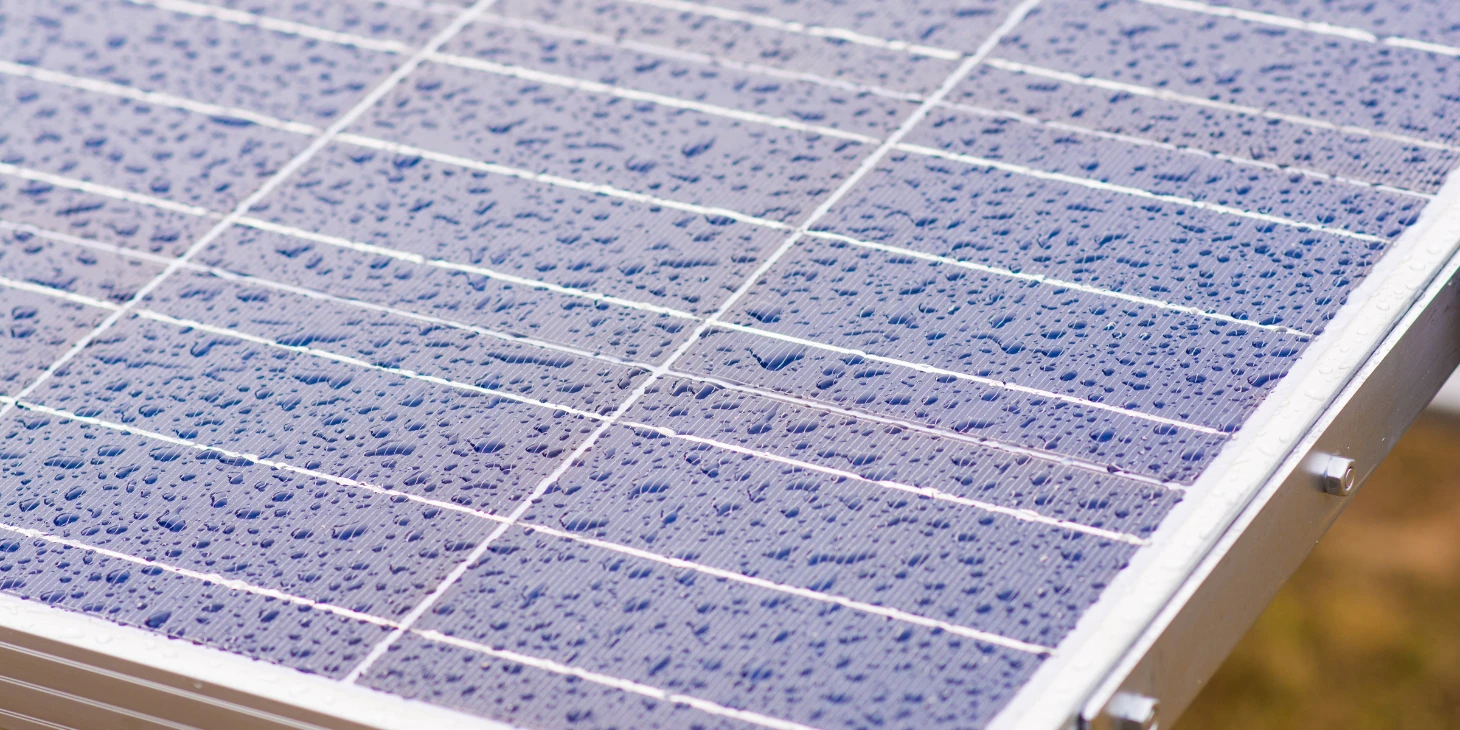
Rain does impact your panels' output, there's no getting around that. Thick clouds and rainfall block sunlight from reaching the PV cells, which means less electricity gets produced. When it's properly pouring, you might see energy generation drop by half or more versus a sunny day.
During heavy, dark rain, your panels could be producing just 5-15% of their usual peak output. That's because most of the light reaching them is diffused and weak. How much your output drops depends on how thick the clouds are and how hard it's raining. A light drizzle barely touches performance, but storm clouds create bigger reductions.
The important bit: solar panels don't stop working in rain. They keep generating from whatever diffused light gets through. Modern panels are built to respond to a wide light spectrum and can operate well even when conditions aren't ideal.
Brief breaks in cloud cover can sometimes cause momentary spikes in output. You can expect lower but not zero generation on rainy days.
Rainfall Patterns in Edinburgh and Scotland
Edinburgh receives roughly 700mm of rain annually, with about 120-130 days per year seeing at least 1mm of precipitation. It rains in Edinburgh on roughly one out of every three days.
The wettest months are late autumn and winter. December and January each average around 70-80mm of rain, whilst spring months like April see closer to 40-50mm. Edinburgh's rainfall sits slightly below the Scottish average, thanks to its east coast location.
Notably, Edinburgh gets about 1,400 hours of sunshine per year, which is decent for solar energy. Rain is common (particularly in winter), yet there are plenty of dry and sunny spells. Solar panels in Edinburgh will face frequent cloudy days and occasional haar (sea fog rolling in from the Firth of Forth), but also benefit from long summer daylight hours and rainfall that keeps them clean.
Benefits of Rain for Solar
Rain actually does your solar system some favours. Edinburgh's regular rainfall brings practical benefits that help your panels perform better over time.
First, it's free cleaning. Panels collect dust, pollen, bird mess, and other debris that blocks light and reduces how much electricity they make. When it rains, all that dirt gets washed away. You get cleaner panels without lifting a finger, which means better output when the sun does appear.
Second, rain cools things down. Solar cells work more efficiently when they're not too hot (high temperatures increase electrical resistance). Rain brings cooler air and cools the panel surfaces directly. This keeps your panels running at their optimal temperature when light is available, rather than overheating and losing efficiency.
Rain keeps your panels cleaner and prevents heat-related efficiency losses, helping maintain better long-term performance.
Are Solar Panels Waterproof and Safe in Heavy Rain?
They absolutely are. Quality solar panels are designed to handle whatever weather Edinburgh throws at them, including heavy downpours. You don't need to worry about water damage.
The construction is solid: solar cells sit between layers of protective encapsulant and tempered glass, all sealed inside an aluminium frame. This design meets international standards for water resistance, wind loading, and impact protection.
Your panels can handle far worse than rain. They're tested against high winds, thick snow, and hailstones measuring up to 25mm across. All the wiring and junction boxes are sealed and weatherproof too. Industry data confirms heavy rain won't harm properly installed panels.
When storms roll through Edinburgh, your rooftop array stays safe. Panels carry IP65-IP67 ratings, meaning they can resist powerful water jets and brief submersion. Rain, sleet, or snow won't cause problems.
Maintenance Tips for Rainy Edinburgh Roofs
Edinburgh's regular rain actually makes solar maintenance easier. Frequent showers wash dirt and grime off your panels naturally, so you're not constantly climbing up to clean them.
Here's how to keep your solar maintenance and repair needs minimal:
Track your output: Rain keeps panels clean, usually maintaining around 95% efficiency. Monitor your system through your inverter or monitoring app. If you notice drops in production on sunny days, that might signal dirt buildup or technical issues.
Post-storm checks: After particularly windy or heavy rain, have a look from ground level. Leaves, twigs, or other debris sometimes gather at the panel edges.
Manual cleaning (rarely needed): You'll probably only need to clean panels once a year, if that. Pick a dry, calm day. A garden hose and soft sponge with mild soap handle most stubborn marks. Avoid pressure washers or rough brushes that could scratch the glass.
Stay safe: Never go up on wet roofs. If your roof is steep or high up, bring in a professional service instead.
Basic checks: Occasionally inspect the mounting brackets and hardware. Beyond that, solar systems look after themselves.

Energy Bills, Storage and Rainy-Day Reliability
Solar cuts your energy costs, even in Edinburgh's climate. Scottish homeowners with solar systems report meaningful reductions in their bills. Yes, cloudy days produce less power, but over a full year, the electricity you generate adds up to real savings.
Edinburgh households have watched their bills drop considerably, which matters more than ever with recent energy price increases. Your panels produce plenty of power during brighter periods, and that surplus either reduces what you draw from the grid or gets exported for payment.
A typical 4kW home system in Edinburgh generates roughly 3,200-3,600kWh annually, which could cover half your household's electricity needs or more. Whether your home is in Leith, New Town, Old Town, Stockbridge, East Edinburgh, South Edinburgh, or West Edinburgh, you'll see genuine savings.
Most Edinburgh solar setups stay connected to the grid, which means you've always got backup power. When your panels aren't making enough electricity, your home automatically pulls from the grid. No interruptions, no hassle.
Adding home battery storage takes things further. Batteries store surplus solar energy from sunny days for use when it's overcast or after dark. This means greater energy independence during grey stretches. Charge up when the sun's out, use that stored power when generation drops.
The Smart Export Guarantee (SEG) pays you for surplus electricity you send back to the grid. Energy suppliers must offer rates for your unused power. When your panels generate more than you're using, you earn credits that reduce your bills further.
Government and Local Incentives
Several UK incentives make solar more affordable for Edinburgh homeowners:
Zero-Percent VAT on Solar: Until March 2027, domestic solar installations carry no VAT. You pay nothing extra on equipment or fitting, which saves around 5% (typically £1,000-£2,000 on a standard system).
Smart Export Guarantee (SEG): This nationwide scheme pays you for surplus solar electricity. Energy companies must purchase your exported power at set rates. Any Scottish solar home with a smart metre qualifies for SEG payments.
ECO4 Grant: This government programme helps lower-income households improve energy efficiency, including solar installation. Eligibility depends on receiving certain benefits or having household income below £31k. Qualifying homes could receive free or heavily subsidised panels.
These programmes, from ECO4 to VAT relief, make solar considerably more affordable. SEG payments add ongoing income, and grants can help if you're eligible.
Final Thoughts on Solar on Rainy Days
Rain and solar make better partners than most people expect. Your panels don't need blazing sunshine, just daylight. Even when it's raining, they're generating electricity whilst getting a natural clean at the same time.
Annual production tells the real story. Sunny days generate plenty of power that balances out the grey ones. Edinburgh homeowners can produce thousands of kilowatt-hours yearly, reducing both carbon emissions and energy bills.
Rain isn't a problem for solar. It's a minor factor that's already built into system performance calculations. When you account for rain's cleaning effects, Scotland's moderate temperatures, and those long summer days, solar performs well here. Scotland's installed solar capacity now exceeds 2GW.
Solar remains one of the smartest energy investments you can make, rainy climate or not. Current incentives and rising grid electricity costs make the financial case stronger every year.
Solar on rainy days works, and it's helping build a cleaner, more resilient energy future for Edinburgh. Want to know more about us or have questions? Get in touch.

Rainy Days FAQs
Do solar panels work when it's raining?
Yes. Solar panels still generate electricity in rainy weather, but at reduced levels. Even under dark rain clouds, there's enough diffused daylight for panels to produce around 5-20% of normal output. Light drizzle or intermittent clouds have smaller impact. You might see panels operating at 20-50% capacity under lighter cloud cover. Rain doesn't shut panels off completely. As long as it's daytime, panels capture available light.
Are solar panels waterproof and safe in heavy rain?
Absolutely. Solar panels are designed for outdoor installation in all weather, so they're fully waterproof. Solar cells and electrical contacts are sealed behind tempered glass and durable backsheet, preventing water ingress. Heavy rain won't damage quality panels. They're tested to withstand rain, high winds, hail, and snow. All cables and connectors are weather-rated (often IP65 or higher), meaning rain won't cause short circuits or safety issues.
Is rain alone enough to keep solar panels clean?
In many cases, yes. Especially in rainy climates like Scotland, panels don't accumulate as much dust as in arid areas. A decent rain shower washes off most dust, pollen, or bird droppings. Scottish experts note that rain helps maintain panel efficiency by naturally rinsing the surface. However, some grime might not fully wash away with rain alone. If you notice grimy panels or output drops, an occasional manual cleaning helps. A gentle wash with water once or twice a year removes any residual film. Rain does 90% of the work.
How can I ensure my solar power supply during extended cloudy or rainy periods?
During extended periods of little sun, a grid-connected system simply draws more power from the grid to make up the shortfall. You won't experience any outage. The transition is automatic. If you want to maximise solar usage and have backup energy for cloudy periods, add battery storage. A home battery stores surplus energy from sunnier days to use later when it's cloudy. During sunny spells, the battery charges up. Then during rainy stretches, you discharge that stored energy, reducing grid needs.
Is solar power still worth it in a rainy country like Scotland?
Yes, very much so. Solar panels are absolutely worth it in Scotland's climate. Thousands of homeowners report considerable savings and satisfactory performance despite weather. Scotland gets substantial solar-suitable daylight across the year (especially April through September). Whilst individual rainy days yield less energy, cumulative annual production makes solar financially viable and environmentally impactful. Scottish weather offers advantages: long summer days give extended generation hours, and moderate temperatures help panels operate efficiently. With current incentives (0% VAT, SEG payments) and high electricity prices, the economics are strong. Installing solar panels in a rainy climate is a sound investment.